


Parking Jam: Car Parking Games
4.45.92K Reviews
App Specs
- Version
- 6.15.0
- Updated On
- License
- Free
- Downloads
- 10,000,000+
- Developer
- TapNation
- Categories
- Strategy
- Platform
- Android, iOS
Screenshots
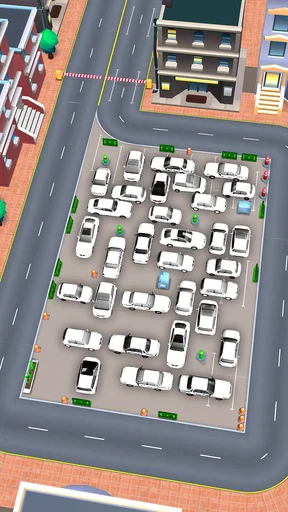
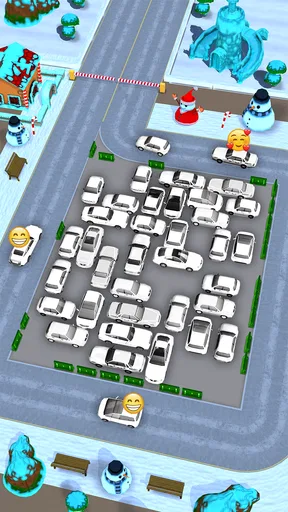
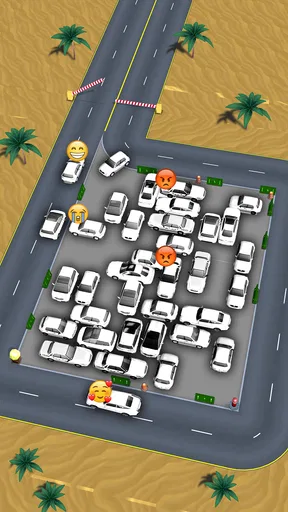
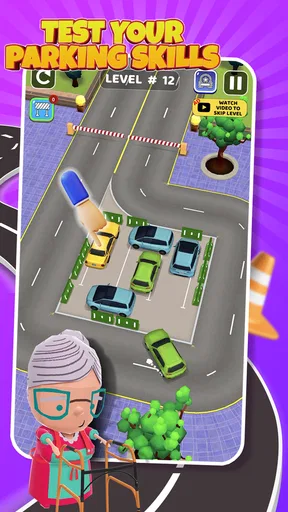
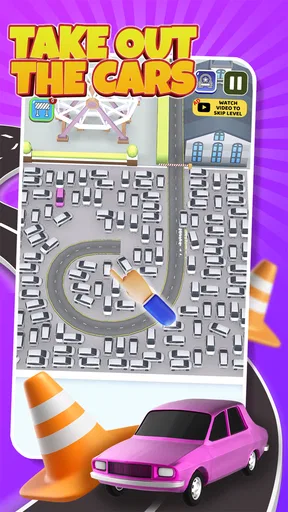
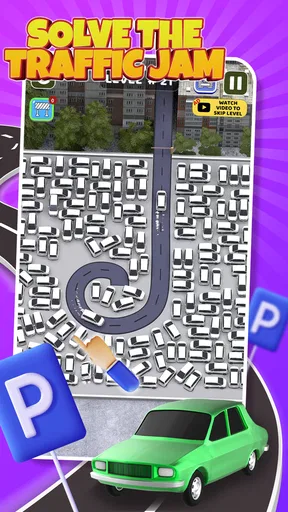
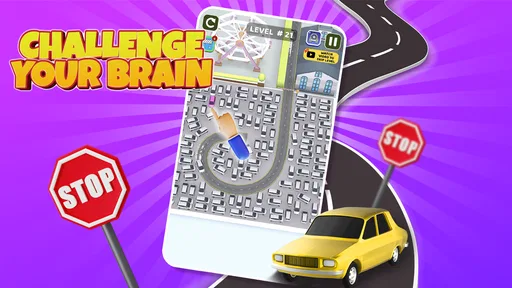
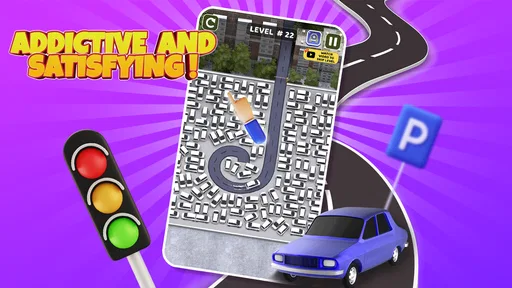
 Analysis by AppCompare
I found Parking Jam: Car Parking Games easy to understand within a few minutes, but not quite as simple to master as its bright, casual presentation suggests. It is a free strategy game from TapNation built around clearing crowded parking layouts by moving vehicles in the right order. The basic action is familiar: choose a car, make space, and work toward an exit without creating a worse traffic knot. What makes it enjoyable is the small amount of planning required before every tap.
I would recommend it to someone who wants short puzzle sessions rather than a long story, a competitive strategy campaign, or a realistic driving simulator. You do not need driving knowledge, and the early challenges are approachable enough for a first-time player. At the same time, the game gradually asks you to stop tapping on instinct. A move that looks helpful can block another vehicle, remove your only escape route, or leave the board in a position that requires restarting.
What to expect when you begin
The game presents itself as a parking puzzle, not as a traditional car game. You are generally solving the arrangement of vehicles rather than steering through roads, managing fuel, or learning realistic controls. That distinction matters because the satisfying moment comes from finding the correct sequence, not from driving skill. I spent more time studying the layout than worrying about speed, and that is exactly where the strategy element works best.
Each puzzle is a compact problem with a clear objective: release the vehicles without letting the remaining cars interfere with one another. The most useful habit is to scan the whole board before touching anything. Look for cars with an obvious path first, then identify which vehicles are trapped behind them. Thinking in terms of dependencies makes the levels feel less random. One car may not be important because of its destination; it may be important because moving it opens the only route for two others.
The game is listed as a strategy title and is free to install. It carries a Mature 17+ content rating, so families should check whether that fits the intended player before handing over a device. It was released on 25 June 2020, and the current version is 6.14.0. Devices running Android 7.0 or later are supported, which covers many older phones but still makes it worth checking compatibility before installing on an aging device.
Its public reception suggests that the format has reached a large audience: it has an average rating of 4.4 from around 69 thousand ratings and more than 10 million installs. I would not treat those figures as a guarantee that every player will enjoy it, though. Puzzle games are particularly personal. Some people like repeating a layout until they discover the clean solution; others find a failed attempt irritating when they wanted something more relaxing.
The first few boards are best viewed as a tutorial in patience. They teach you that a vehicle can be useful even when it is not the first one you should move. A car near an exit may still need to wait if another vehicle must pass through its space. I recommend resisting the urge to clear the most visible car immediately. Instead, ask which move creates the most room while preserving future options.
Worth Reading Before You Choose

Flipboard Shows What News Apps Must Do Beyond the Feed

Switching to Android Auto Means Rethinking Your Driving Routine

Google Calendar Makes a Crowded Week Easier to Manage

Ludo King Makes the Most of the Minutes Between Plans

Baby Panda World Brings Quick Play to Modern Phones, but Its Game Library Feels Busy

ESPN’s Live Game View Makes Following Close Games Easier
Installing it without overthinking the first session
Because the game is free, the initial decision is straightforward, but free does not mean entirely frictionless. In-app purchases range from $0.49 to $89.99 per item, so I would approach the store elements carefully, especially if a child is using the device or if you prefer a completely uninterrupted puzzle experience. You can begin without paying, and I suggest doing that before deciding whether any optional purchase adds enough value for your habits.
Once installed, I would set aside ten quiet minutes rather than opening it while doing something that needs concentration. The puzzles are short, but the most useful learning happens when you can pause and inspect the board. A rushed first session can give the wrong impression: you may blame the controls when the real issue is that you started moving cars before understanding the layout.
There is no reason to approach the opening levels like a timed driving test. Use them to learn how the game responds to a tap or swipe, how vehicles leave their spaces, and how quickly a seemingly harmless action changes the available routes. If a move fails, restarting is not a sign that you misunderstood the entire game. It is part of the puzzle loop, and the second attempt is often much faster because you already know which space caused the problem.
My practical advice is to play with the phone held comfortably and keep your finger movements deliberate. On a small screen, a hurried touch can select the wrong vehicle or make you lose track of which car you intended to move. The game is most pleasant when you treat every action as a decision rather than as a reflex.
How to reach the first meaningful success
The first satisfying breakthrough comes when you stop asking, “Which car can move now?” and start asking, “Which car must move eventually, and what has to happen before that?” That change in perspective turns the board into a small logic diagram. I usually begin by locating vehicles with a completely open route. If moving one of them creates space without blocking another lane, it is often a safe opening.
After that, I trace the next two or three consequences mentally. Suppose one car can leave, but its movement exposes a vehicle behind it. That second vehicle may then open a crossing path. If the first move instead causes a different car to stop in the middle of the board, the apparent progress may be misleading. The best early solution is not always the fastest-looking move; it is the move that keeps several future choices available.
A useful technique is to divide the layout into zones. I look at the exit area, the central crossing space, and the corners where cars are most likely to become awkwardly positioned. Clearing the exit alone does not solve the board if the center remains blocked. Likewise, moving a corner car too early can remove a useful buffer. This simple mental map helped me avoid restarting for reasons that were entirely predictable.
When you make a mistake, identify the exact consequence instead of replaying randomly. Did you block the only route? Did you remove a car that was acting as a temporary stopper? Did you create a turn that another vehicle could not use? Answering that question gives the next attempt a purpose. This is one of the game’s strongest qualities: even a failed round can teach you something concrete.
For a first-time user, I would define success as completing a board while understanding why the sequence worked. Finishing by tapping through trial and error can feel good once, but recognizing the dependency between vehicles is what makes later layouts more rewarding. It also gives you a repeatable method when the visual arrangement becomes busier.
Where new players commonly get confused
The biggest source of confusion is assuming that an open-looking direction is automatically a safe direction. A vehicle may have room to move while still occupying a critical position for another car. I learned to check the spaces that will be left behind, not only the spaces in front. The empty area created by a move can be just as important as the route the car takes out.
Another trap is treating the board like a queue. It is tempting to remove vehicles from the front one by one, but parking layouts rarely reward a simple front-to-back approach. Some cars need to move sideways first, while others should remain untouched until the surrounding area is clear. If you keep reaching a point where every remaining car seems blocked, the problem is often an earlier move rather than the final group of vehicles.
Players may also wonder whether they should keep trying a difficult layout or restart quickly. My rule is simple: if the board still contains two or three meaningful options, continue and observe the result. If every route now depends on a space you already closed, restart immediately. Repeating a doomed arrangement wastes more time than beginning again with a better plan.
Do not confuse a failed attempt with a need to spend money. The central challenge is sequencing, and I found that slowing down was more valuable than looking for a shortcut. Optional purchases may appeal to players who want convenience, but they are not a substitute for learning how the board’s spaces interact. If your goal is to improve at the puzzles, pause, inspect, and retry before considering any purchase.
The Mature 17+ label is another detail that can surprise people who see the colorful parking theme and assume the game is aimed at young children. I would not choose it automatically for a child just because the controls are simple. Parents should make their own decision based on the rating and the way the game is used, particularly where in-app purchases are concerned.
Using it in an ordinary day
This is a good fit for the small gaps that are too short for a long game but long enough for a focused puzzle. I can imagine opening it while waiting for an appointment, taking a few boards during a commute when it is safe to do so, or using it for a brief mental reset after work. The important difference from passive scrolling is that each round gives your attention a clear, limited task.
For example, if I had ten minutes before leaving home, I would play a couple of levels and stop after a successful solution rather than chasing an uncertain board. That leaves the session feeling complete. If I were tired, I would avoid treating it as a relaxation game because a crowded layout can become surprisingly demanding when my attention is low. The same puzzle that feels satisfying in the afternoon can feel needlessly annoying late at night.
It also works as a casual shared puzzle. You can show another person the board and compare the first move you would make, then see whose sequence holds up. That kind of conversation is more interesting than simply handing over the phone because the reasoning is visible. Still, people who want a multiplayer experience, a social ranking system, or a story with characters should look elsewhere; this game’s appeal is concentrated in its individual layouts.
How it compares with other ways to play
Compared with a realistic parking simulator, this game is less concerned with acceleration, steering accuracy, mirrors, and physical driving behavior. That makes it easier to pick up, but it also means it will not teach parking technique or satisfy someone looking for an authentic vehicle experience. If you want to practice maneuvering a car, a simulation-focused alternative is the better choice.
Compared with word puzzles or number-based brain games, the challenge here is spatial and sequential. You are reading positions, predicting movement, and preserving room. Someone who enjoys visual logic may find this more immediate than a grid of numbers. On the other hand, if you prefer puzzles with a single clearly stated mathematical rule, the changing arrangement of vehicles may feel less tidy.
It is also different from a large strategy game with resource management, armies, upgrades, or a long-term campaign. There is no need to plan across many hours before seeing a result. Each parking layout gives you a contained decision problem. That is its main strength for casual players and its main limitation for anyone seeking deep progression or a persistent world.
The trade-off is clear: the compact format makes the game approachable, while repeated layouts can eventually feel familiar if you want constant novelty. I would choose it over a heavier strategy title when I have only a few minutes and want an immediate mental challenge. I would choose a broader strategy game when I want long-term planning, a stronger sense of development, or a reason to return beyond solving the next board.
Small habits that make harder boards fairer
My most useful habit was to count choices rather than moves. A solution that uses fewer actions can be elegant, but a solution that preserves more alternatives is often safer. Before moving a vehicle, I ask whether the action leaves at least one other useful route. If it does not, I look for a different opening unless the move is clearly required.
I also recommend remembering the last irreversible mistake. When a board collapses, go back to the move immediately before the collapse and test another option. This is more efficient than restarting and making every early decision differently. It turns the game into a controlled experiment: keep what worked, change what failed, and learn which dependency you missed.
A third technique is to separate “exit moves” from “space-making moves.” Some vehicles are ready to leave, while others need to be repositioned mainly to create room. Mixing those purposes can make the layout confusing. I first identify which cars can reduce congestion, then decide which of them should actually leave. That distinction helped me avoid using an exit-ready vehicle as a temporary blocker.
Finally, stop when concentration drops. The game does not become more enjoyable when every tap is made without looking ahead. A short break can be more useful than several frustrated retries, especially because returning with fresh attention often reveals the correct sequence quickly. This is a small point, but it matters if you want the experience to remain a puzzle rather than a source of irritation.
Who will enjoy it, and who should skip it
I think it suits first-time puzzle players, fans of short strategy challenges, and anyone who likes arranging objects under spatial restrictions. It is especially approachable if you want a game that explains itself through interaction instead of a long tutorial. You can understand the central idea quickly, then improve through observation.
I would be more cautious recommending it to people who dislike restarting, become impatient with trial and error, or expect every car game to involve direct driving. It is also not my first choice for someone seeking a deep campaign, a narrative reason to continue, or a carefully balanced competitive mode. The parking theme is the frame for the puzzle; it is not a realistic driving experience.
The free entry point makes it easy to test personally. Since TapNation’s game has a 4.4 average and has passed 10 million installs, there is clearly broad interest in this style of challenge, but popularity does not remove the need to check whether its pacing matches your taste. I would play several early boards before deciding whether it deserves a permanent place on my phone.
My recommendation after playing
Parking Jam: Car Parking Games works because it turns a familiar situation into a sequence of small logical decisions. The controls are approachable, the objective is easy to grasp, and the best solutions reward planning rather than fast fingers. I particularly like the moment when a crowded arrangement suddenly becomes readable and one careful move unlocks the rest of the board.
Its limitations are equally clear. The simple presentation may not hold the attention of players who need rich progression, and the free-to-play structure deserves a little awareness because purchases are available from $0.49 to $89.99 per item. The Mature 17+ rating also means I would check suitability before recommending it to younger players, despite the accessible puzzle format.
For a first session, install it, play slowly, and treat the opening boards as lessons in planning. Look for the car that creates space, not merely the car that appears closest to freedom. When a move fails, study the blockage it caused and try again with that specific lesson in mind. If you enjoy that process, this strategy game can become a dependable short-session companion. If you want realistic driving or a larger strategic world, I would point you toward a different kind of game instead.
My final view is positive, with one condition: enjoy it as a spatial puzzle, not as a conventional parking simulator. The real reward is learning to see the whole board before making the first move. That small change in approach is what turns a collection of blocked cars into a satisfying, repeatable challenge.
Pros
- Simple controls make it easy to start playing immediately.
- Short levels are ideal for quick gaming sessions.
- Increasing difficulty keeps the puzzles engaging.
- Colorful visuals make cars and parking areas easy to distinguish.
- Works well for players who enjoy logic and organization puzzles.
Cons
- Some levels can feel repetitive after extended play.
- Hints or extra moves may be limited without watching ads.
- Frequent advertisements can interrupt the gameplay flow.
- Later puzzles may depend more on trial and error.
- The game may become frustrating when one wrong move blocks the exit.
FAQs for Parking Jam: Car Parking Games
What is Parking Jam: Car Parking Games?
Parking Jam: Car Parking Games is a casual puzzle game focused on freeing cars from crowded parking areas. Each level presents vehicles blocking one another, and you must move them in the correct order to clear the exit. The game combines simple swipe controls with increasingly challenging layouts, making it easy to start but progressively more demanding as new obstacles and tighter spaces appear.
How do you play Parking Jam: Car Parking Games?
To play, select a vehicle and swipe it in the direction it is facing, provided that the path is clear. Your objective is to move the cars without creating additional blockages and guide them out of the parking lot. Later stages may include barriers, pedestrians, special vehicles, or limited movement space, so planning several moves ahead is more effective than tapping randomly.
Is Parking Jam: Car Parking Games free to download?
The game is generally available as a free download, allowing players to access its main puzzle levels without an upfront purchase. However, free versions commonly include advertising and may offer optional in-app purchases for hints, coins, extra lives, or other bonuses. Before installing, it is worth checking the current store listing for pricing, advertisements, and purchase details on your device.
Does Parking Jam: Car Parking Games work offline?
Many of the core parking puzzles can usually be played without a continuous internet connection, which makes the game suitable for short sessions while traveling or when mobile data is unavailable. Nevertheless, an internet connection may be required for advertisements, rewards, cloud features, updates, or promotional content. Offline availability can vary by version, so testing the game after installation is recommended.
Is Parking Jam: Car Parking Games suitable for children?
Parking Jam: Car Parking Games is generally easy for children to understand because it uses visual puzzles and straightforward swipe controls. It can encourage planning, spatial awareness, and problem-solving, although some later levels may become frustrating without hints. Parents should also review the app’s advertising and in-app purchase options, particularly if the game will be used by younger children on a shared device.


